I have rented cars at Keflavik International Airport more times than I can count, and I still remember my first time. The agent offered me something called gravel protection, and I waved it off because it sounded like a classic upsell. Three days later a stone chip appeared on the windshield somewhere on Route 62 in the Westfjords. Lesson learned. If you are booking car rental in Iceland Reykjavik airport, there are a few things that genuinely matter, and most of them are not on the booking site’s homepage.
First, a quick geography note that trips people up
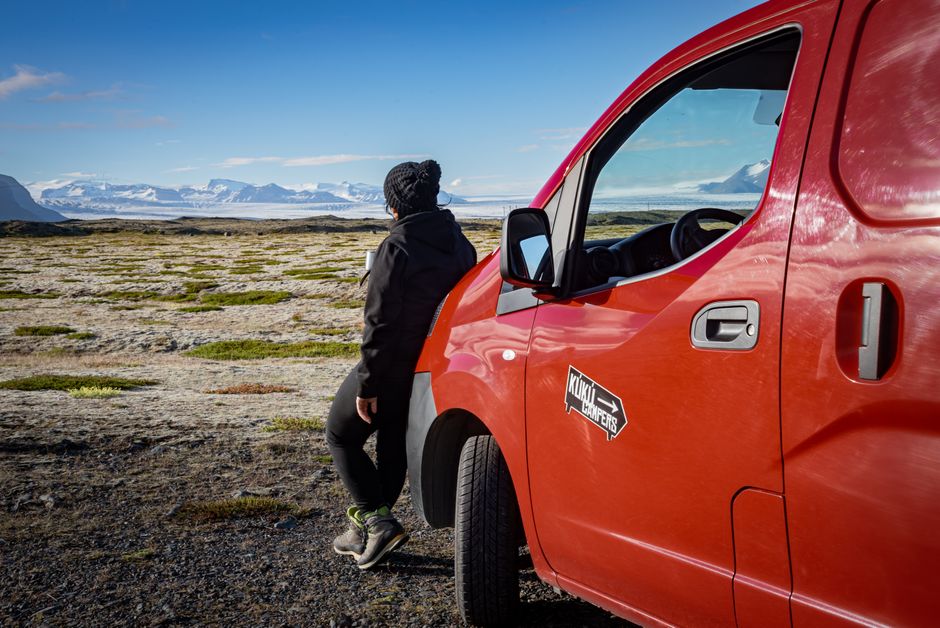
Reykjavik has two airports, and the one your flight lands at is almost certainly not the one called Reykjavik Airport. International flights arrive at Keflavik International Airport (KEF), about 45 minutes west of the capital. Reykjavik Airport (RKV) handles mostly domestic flights and a handful of short-haul routes. When I say car rental in Iceland Reykjavik airport in this article, I mean the Keflavik side, because that is where 95 percent of visitors pick up a car.
Most rental desks sit in or next to a dedicated shuttle area a two-minute bus ride from the termina
 l. Blue Car Rental, Lagoon Car Rental, Geysir, Hertz, Europcar, and the local budget favorite Lotus all operate there. The shuttle is free and runs every few minutes, so do not panic when you land and see no desks in arrivals.
How much does it actually cost?
Prices swing hard by season, and I mean hard. A small 4×4 that costs around 8,000 to 10,000 ISK per day in October can hit 20,000 to 28,000 ISK per day in July. Book early for summer, ideally four to six months ahead. I have watched July prices climb 40 percent between February and April.
As a rough baseline for a week-long rental:
- Small economy car (Yaris class): 45,000 to 90,000 ISK per week depending on month
- Compact SUV (Dacia Duster, Jimny): 70,000 to 140,000 ISK per week
- Larger 4×4 (Land Cruiser class, needed for F-roads): 150,000 ISK and up, sometimes well up
One more cost nobody mentions until you are standing at the desk: young driver fees. Under 23, expect roughly 2,000 to 3,500 ISK per day extra. And most companies require drivers to be at least 20, sometimes 23 for the bigger 4x4s.
The insurance question, or why gravel protection is not a scam
Iceland’s gravel roads and loose surface material eat windshields. CDW from your credit card usually does not cover glass, and it rarely covers gravel damage, sand, or ash. So the add-ons at the desk are not all junk here. The ones worth knowing:
- Gravel Protection (GP): covers windshield chips and paint from stones, around 1,500 to 2,500 ISK per day
- Sand and Ash Protection (SAAP): matters mostly in the south and highlands, roughly 2,000 to 3,000 ISK per day
- Zero excess / Super CDW: drops your deductible from the usual 250,000 to 350,000 ISK down to zero
My honest take: get GP and zero excess, skip nothing else unless you are doing the highlands. A single windshield replacement can run 60,000 to 90,000 ISK, so the daily fee pays for itself after one bad chip. Check your credit card fine print first though. Some premium cards (Chase Sapphire Reserve, for example) do cover CDW abroad, which lets you decline the basic package, but it will never cover gravel.
Do you need a 4×4?
Depends entirely on your route. The Golden Circle, the south coast as far as Vik, and the whole Ring Road in summer are all paved. A small car handles them fine. I did the Ring Road in a Corolla in June and never wished for more.
You need a 4×4 for two things: F-roads (interior highland tracks, open only in summer) and winter conditions. Landmannalaugar, Askja, Thorsmork, and the Kjolur route all require proper high-clearance 4x4s, and rental agreements explicitly forbid taking standard cars on them. Ignore that rule and you are paying for the damage yourself, no insurance will touch it.
What about winter rentals?
From November through March, I would not drive anything without studded winter tires, which every serious rental company includes automatically. That is the good news. The less good news: the Ring Road in the north regularly closes for storms in January and February. Check road.is and vedur.is every single morning in winter. Seriously, every morning. I got caught in a whiteout near Egilsstadir once because I checked the forecast at breakfast and not at noon, and it cost me a very tense afternoon.
Deposits, fuel, and return logistics
Rental deposits at Keflavik run 200,000 to 400,000 ISK, held on your card and released up to two weeks after return. Bring a real credit card, not a debit card. Several desks refuse debit cards outright, and that is an awkward conversation to have at 1 a.m. after a delayed flight.
Fuel is another budget line people underestimate. As of my last trips, petrol sat around 300 ISK per liter, and a full Ring Road loop in a normal car burns roughly 130 to 160 liters. That is 40,000 to 50,000 ISK in fuel alone. One quiet airport tax quirk: most rentals now price fuel on a full-to-empty basis or full-to-full. Pick full-to-full. The airport Orkan station is genuinely one of the priciest in the country, so fill up in Reykjavik or Keflavik town the night before you fly out.
Which rental companies do I actually recommend?
After several rentals, here is where I have landed. This is opinion, not gospel:
| Company | Best for | My experience |
|---|---|---|
| Blue Car Rental | Reliable all-rounder | Three rentals, zero problems, quick shuttle |
| Geysir | Newer fleet, good pickup | Slightly pricier, spotless cars |
| Lotus | Budget trips | Cheap, but older cars and slower counter |
| Hertz / Europcar | Points and status | Same prices as local firms, nothing special |
The local companies usually beat the international brands on price for the same vehicle class, and their insurance paperwork is more transparent. Avoid the rental brokers that look suspiciously cheap on comparison sites. A 25,000 ISK per week quote often means a 900,000 ISK deposit and zero coverage, and you find that out at the desk.
One-way rentals and the airport pickup itself
Most people fly in and out of KEF, so round-trip rentals are the norm and the cheapest option. One-way fees exist if you want to drop the car in Akureyri or Egilsstadir, usually 15,000 to 30,000 ISK depending on distance. It can be worth it if your route ends in the north and you would rather fly back than retrace 500 km.
On pickup day, plan for the whole thing taking about an hour from landing: passport check, license, card, deposit, shuttle, and the walk-around inspection. Photograph every dent and chip before you drive off. I take a slow 360-degree video on my phone, and it has settled two damage disputes in my favor over the years.
Quick answers to common questions
Can I drive the Ring Road with a regular license?
Yes. Any valid national license in Latin script works. EU and US licenses are fine, no international driving permit needed.
Is there a mileage limit?
Almost every Keflavik rental includes unlimited kilometers. The catch is geographic: your agreement maps where you may and may not drive, and highland F-roads are off-limits unless you rented a proper 4×4.
Is it safe for solo drivers?
In summer, absolutely. Roads are well signed, traffic is thin outside Reykjavik, and phone coverage covers almost the whole Ring Road. In winter, solo driving gets riskier, mostly because storms can strand you. Carry food, water, and a charged power bank in winter, and tell someone your route.
The short version
Book early for summer, get gravel protection plus zero excess, skip the cheapest broker quote, bring a real credit card, and check road.is every morning from November to April. Do those five things and car rental in Iceland Reykjavik airport becomes the easy part of your trip, which is exactly how it should be. The country’s real challenges are the wind, the weather, and deciding which waterfall to skip because you cannot see them all.